Sackville is built around the Sackville River, and the river shapes almost every outdoor project here. In July 2023, record rain pushed the Sackville River well past its banks; one Lower Sackville homeowner reported two feet of water in her basement, and flooding closed the junction of Highways 102 and 101 at Lower Sackville (Wikipedia, CBC).
If you live in Lower, Middle or Upper Sackville, the lesson is practical: get the drainage and grading right before you invest in sod, patios or planting. This guide explains what to look at, what HRM requires, and how we plan work in a watershed like this one.
What the river means for your property
Flooding from the Sackville and Little Sackville rivers is far from new. GHD, the engineering firm HRM hired for its floodplain study, says continued urbanization and a changing climate have been increasing how often it happens in the watershed (GHD), and a 2017 study for HRM recommended restoring the rivers’ natural shape and surrounding vegetation, buying at-risk properties and using low-impact development (CBC).
HRM has been adopting floodplain maps and rules for the Sackville and Little Sackville rivers since 2023 (Bedford, Lower and Upper Sackville, Beaver Bank and Hammonds Plains); the interim rules restrict new development in 1-in-20-year flood-risk zones to uses such as recreation, forestry and fishing. If you are near either river, find out where your lot sits before you plan anything that changes the ground. We are not an engineering firm, so larger flood-mitigation designs need a professional engineer.
Drainage and grading you can control
Halifax Water’s seasonal checklist recommends correcting lot grading so water is directed at least 2 m (6 ft) away from the foundation, extending downspouts and sump discharge pipes the same distance, and installing a sewer backwater valve. Halifax Water lists poor lot grading and drainage, failed weeping tile, sump pump failures and overflowing eavestroughs among common causes of basement flooding (Halifax Water), and the sewer lateral from your property line to your house is the homeowner’s responsibility.
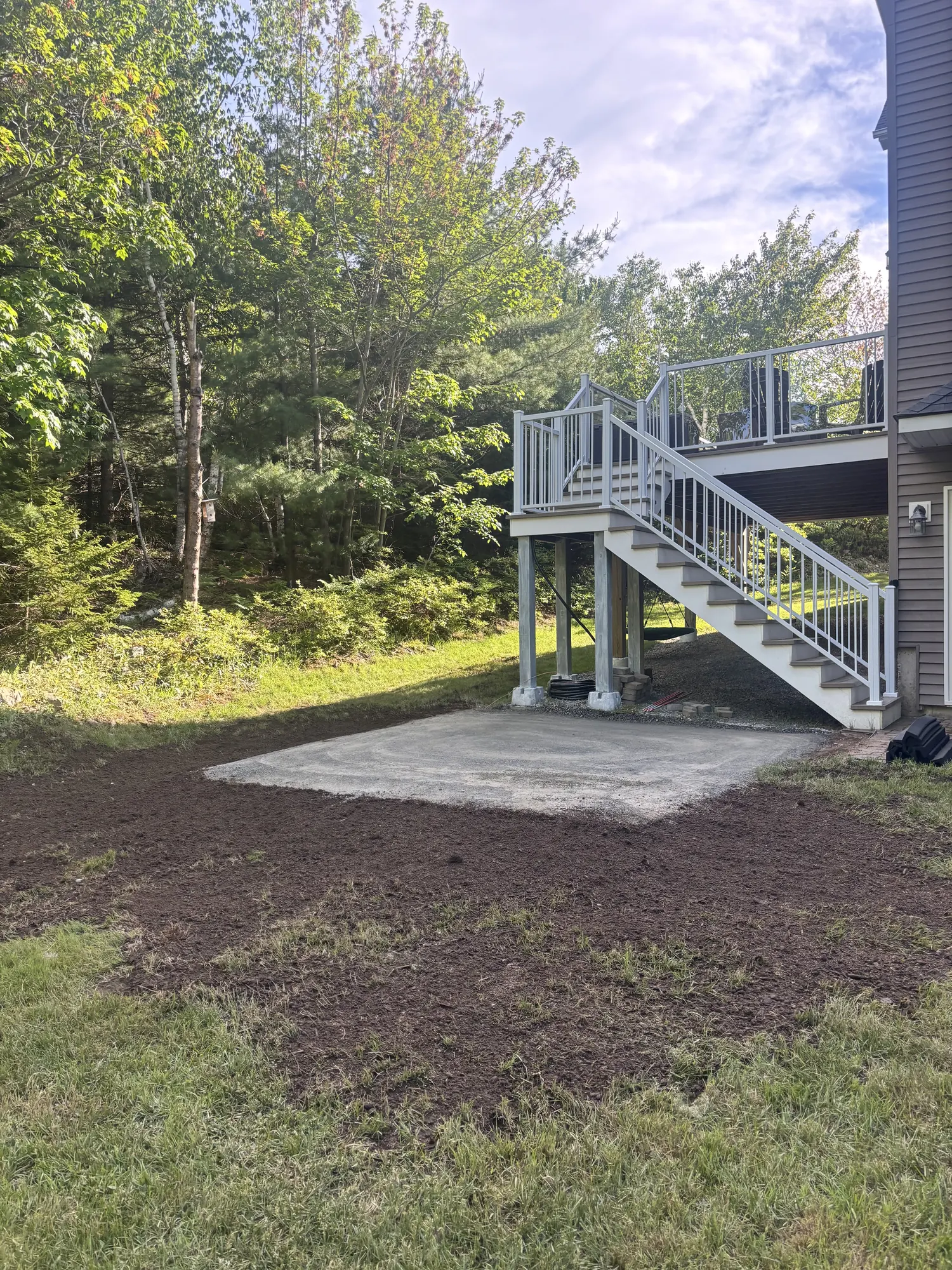
On the landscaping side, that means correcting low spots, directing downspouts well away from the foundation and building patios and walkways to slope away from the house. Our drainage solutions and excavation services are designed around moving water, not just hiding it.
Sod, plants and what actually thrives
New sod and plantings struggle where water pools or soil stays saturated. Getting the grade right first, then laying sod or planting, is cheaper than replacing what drowns. Where drainage is solved, sod installation gives you a finished lawn quickly, and plants and tree installations bring structure to beds and property lines.
HRM rules worth knowing
- Retaining walls over 1 metre. Walls above 1 m on a residential lot require an engineer-designed, engineer-certified build and a Lot Grading Permit under By-law L-400, and nothing, footings included, may cross your property line. Source
- Underground utility locates. Before any excavation, request locates. Halifax Water says requests go through Info-Excavation (1-866-344-5463, online or the mobile app), and its locates are free of charge. Source
- Decks. A building permit is needed for a new or replacement deck; HRM’s deck FAQ calls for footings with a minimum 4 ft (1.2 m) of frost protection on attached decks and decks over 2 ft high, plus a site plan showing property lines and any watercourse buffers. Source
Always double-check with the municipality (halifax.ca or 311); requirements and fees can change from one season to the next.
When to book
Search patterns across Nova Scotia (Google Trends) show interest in landscaping rising from March and peaking in May, with winter the quietest stretch. Because drainage work should come before everything else, it is worth getting a site visit in late winter.
Services we offer in Sackville
Every project starts with a conversation and a free quote. We respond within 24 hours, and we’re available any day of the week.
Common questions
Should I fix drainage before laying sod in Sackville?
Are there floodplain rules for Sackville properties?
Does Dunbrack’s serve Lower and Middle Sackville?
Ready to plan your Sackville project?
Tell us about your property and we’ll get back to you within 24 hours with a free, no-obligation quote.
Sources
Facts about this area and the rules above come from these sources. By-laws, fees and permit requirements change, so confirm with the municipality before you start.
- Sackville River — Wikipedia
- Nova Scotians describe harrowing encounters, damage from historic floods — CBC
- HRM must implement Sackville rivers floodplain zoning, advocate says — CBC
- Sackville rivers floodplain study — GHD
- History of flooding — Halifax Regional Municipality
- Seasonal checklist — Halifax Water
- Basement flooding & sewer backup — Halifax Water
- By-law L-400, Respecting Lot Grading — Halifax Regional Municipality
- Decks: frequently asked questions — Halifax Regional Municipality
- Click before you dig — Halifax Water
- Google Trends: landscaping searches, Nova Scotia, past 5 years