
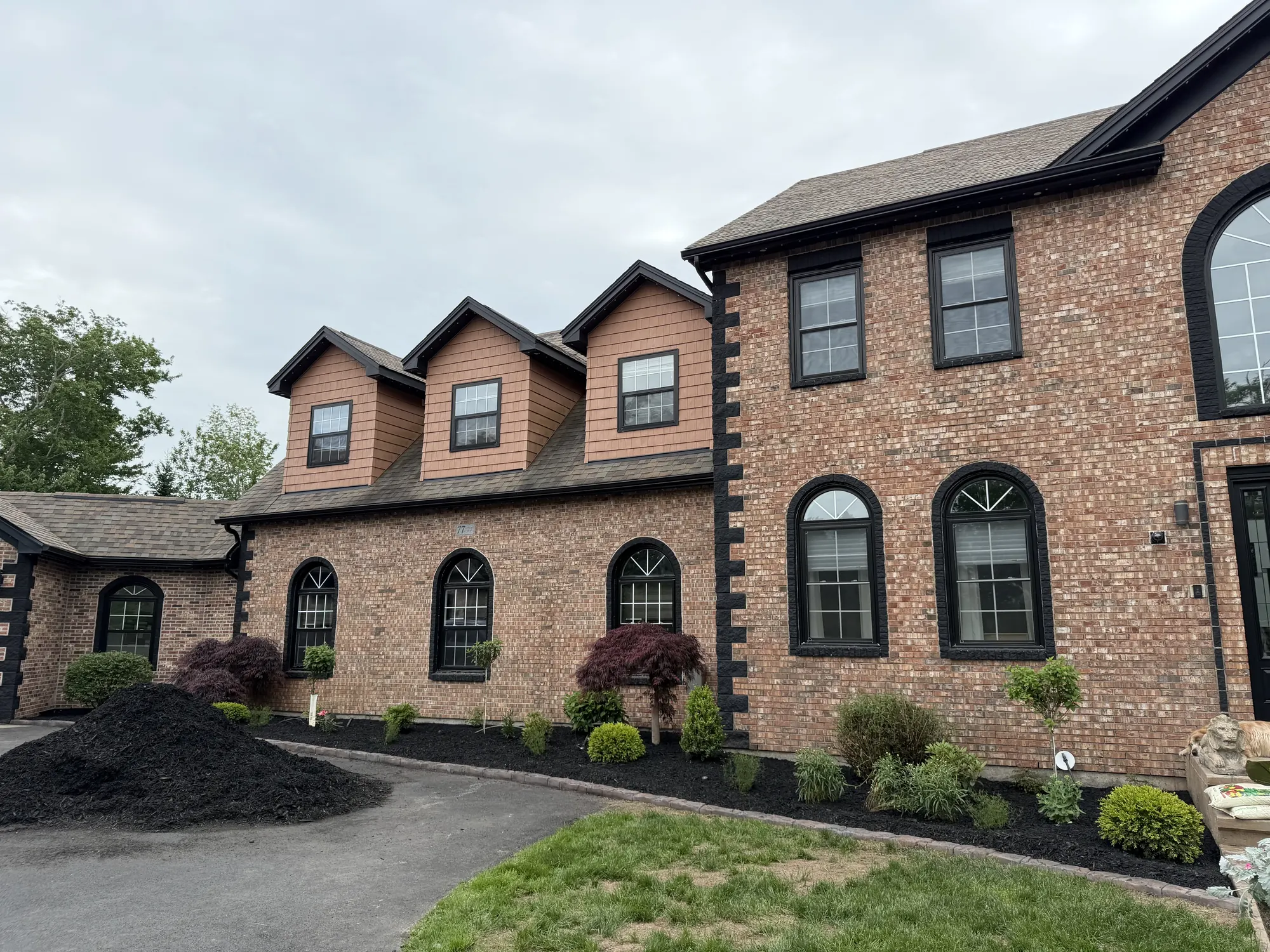
Clayton Park takes its name from the Clayton family, who owned land on the slope of Geizer’s Hill. The development was approved by the County of Halifax on 12 July 1962, and the Shaw Company, a major brick maker, set architectural requirements that included a high percentage of brick for houses and apartments (Wikipedia). Clayton Park, Rockingham and Fairview were all amalgamated into the city of Halifax in 1969, and the area was built out largely through the 1960s and 1970s.
That history is visible in the yards today: brick houses, mature trees, established beds and long-serving driveways and walkways. It also means a lot of properties are ready for a refresh. Here is how we approach landscaping and hardscaping in Clayton Park.
Refreshing an established yard
On a lot that has been landscaped for decades, the best results usually come from editing rather than starting over: renewing mulch and bed edging, replacing overgrown shrubs, adding structure with trees and perennials, and fixing the hard surfaces that have settled or cracked.
- Paver walkways and entrances to replace cracked concrete or worn steps and give brick homes a crisp front approach.
- Garden beds, plants and tree installations to renew foundation planting and screening.
- Low voltage landscape lighting to highlight the brickwork, entrance and new plantings after dark.
- Retaining walls and drainage solutions where older grades have shifted or water collects near a foundation.
- Fencing, decks and pergolas to make a compact backyard more private and usable.
Older foundations and drainage
Three habits from Halifax Water’s seasonal checklist cover most basement-flooding risk: grade the ground so water moves at least 2 m (6 ft) away from the house, extend downspouts and the sump discharge that far, and install a backwater valve on the sewer line. On older lots, downspouts that dump next to the foundation and low spots created by settling are common culprits, and they are worth fixing before you invest in new patios or sod.
HRM rules worth knowing
- Retaining walls over 1 metre. A residential retaining wall taller than 1 m falls under HRM’s Lot Grading By-law (L-400): it needs a Lot Grading Permit, a professional engineer’s design and certification, and must sit entirely on your own land, footings included. Source
- Underground utility locates. Call or click before you dig: Halifax Water routes locate requests through Info-Excavation (1-866-344-5463, the website or the mobile app), and its locates cost nothing. Source
- Fences. Fences are exempt from the Nova Scotia Building Code, but HRM’s Building By-law (B-201) regulates fences over 2 m (6.5 ft): those need a permit, community council approval and notice to neighbours. Ordinary height and setback limits come from your zone’s land-use by-law, so check before you build. Source
Always double-check with the municipality (halifax.ca or 311); requirements and fees can change from one season to the next.
When to book
The calendar is predictable: in Nova Scotia, Google Trends shows landscaping searches building from March, hitting their high in May and fading through autumn. For a full-yard refresh, ask for a quote in winter so beds, walkways and planting can all be scheduled for spring.
Services we offer in Clayton Park
Every project starts with a conversation and a free quote. We respond within 24 hours, and we’re available any day of the week.
Common questions
Can you replace old concrete walkways with pavers?
Do I need a permit for a retaining wall in Clayton Park?
Does Dunbrack’s serve Clayton Park?
Ready to plan your Clayton Park project?
Tell us about your property and we’ll get back to you within 24 hours with a free, no-obligation quote.
Sources
Facts about this area and the rules above come from these sources. By-laws, fees and permit requirements change, so confirm with the municipality before you start.