
Cole Harbour began in 1765 as an allotment of six 500-acre lots stretching east from Dartmouth to Lawrencetown, and its early settlers were farmers. After the Second World War, population growth turned much of that farmland into an urban community (Community Stories). You can still see the farm roots at the Cole Harbour Heritage Farm Museum on Poplar Drive, with its heritage barns, working blacksmith shop and freshwater marsh boardwalk (Nova Scotia Tourism).
That mix of suburban lots and protected green space shapes how people use their yards. This guide covers decks, pergolas, fencing and planting in Cole Harbour.
Backyards near the marsh and green space
The Cole Harbour salt marsh formed in the valley of a small river a few thousand years ago, when rising seas flooded it into a broad, shallow estuary. Today the area is protected by parkland and a special area designation and is crossed by walkers and cyclists on a section of the Trans Canada Trail (Community Stories).
If your lot backs onto the marsh, a trail or other protected land, check HRM rules and any wetland or watercourse limits before you change grades, drainage or vegetation. Within those limits, fences, pergolas and thoughtful planting can give you privacy and shade while respecting the setting.
Projects we’re asked about
- Composite and wood decks that extend living space without overpowering a smaller yard.
- Pergolas for shade over a deck or paver patio.
- Chain link, wooden and PVC fencing for privacy, pets and play areas.
- Plants, trees and garden beds as natural screening, with low voltage landscape lighting to show them off.
- Paver patios and walkways to replace tired concrete or bare ground.
HRM rules worth knowing
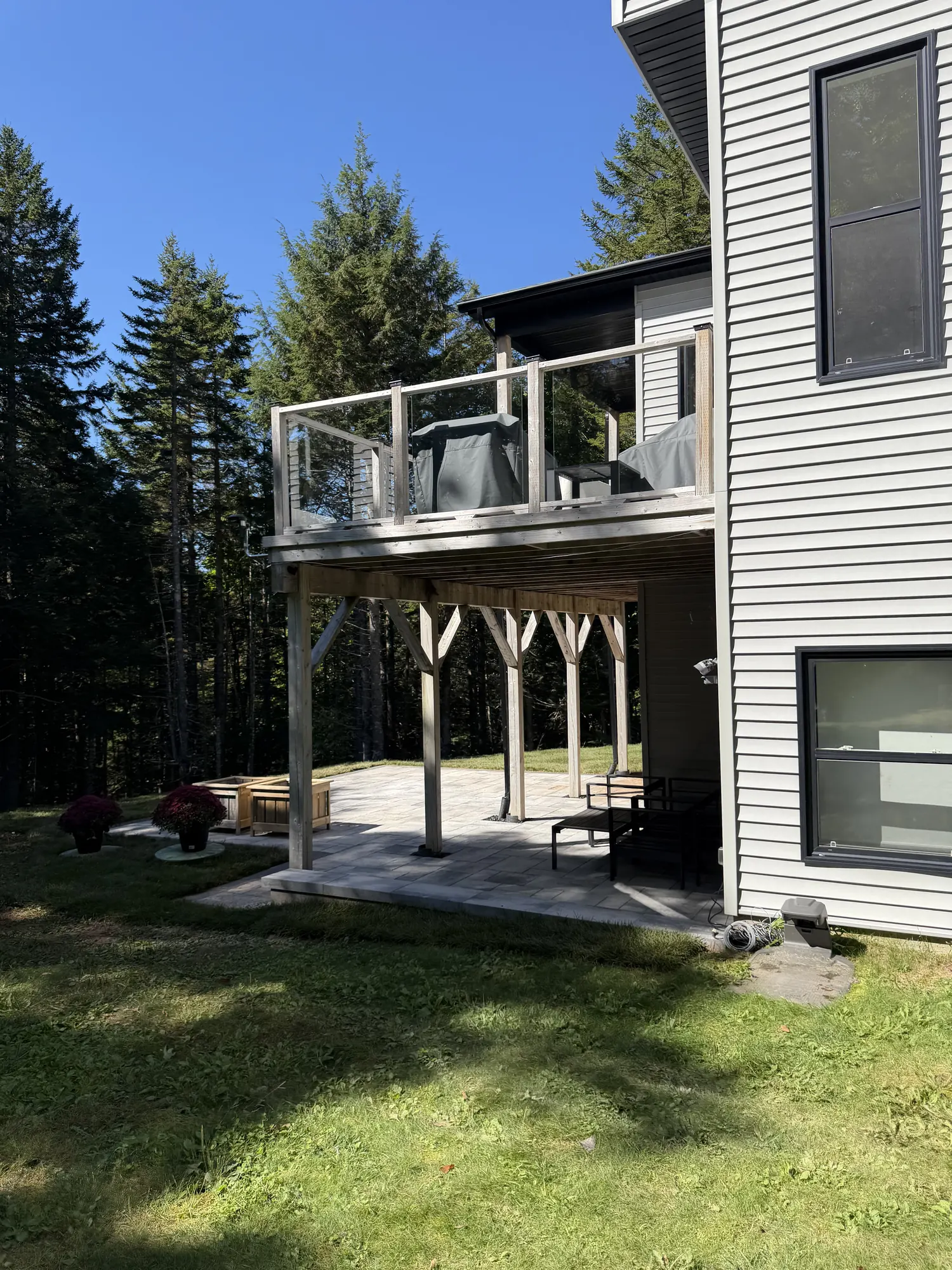
- Decks. New or replacement decks need a building permit. HRM’s deck FAQ requires footings with at least 4 ft (1.2 m) of frost protection when a deck is attached to the building or higher than 2 ft, and the site plan must show distances to property lines and any watercourse buffers. Source
- Fences. Standard fences don’t need a building permit under the provincial code, yet HRM’s B-201 regulates fences taller than 2 m (6.5 ft), requiring approval from community council after neighbours are notified; zoning rules govern height and setbacks for everything else. Source
- Fire pits and outdoor fireplaces. HRM’s open-air burning by-law does not cover CSA- or ULC-approved propane and natural-gas appliances, but wood fires are limited by season on serviced lots and by provincial burn restrictions, so look up the current rules first. Source
By-laws and permit rules get updated, so check the current version with HRM (halifax.ca or 311) before you commit to a design.
When to book
Google Trends data for Nova Scotia shows searches for landscaping climbing from March, peaking in May and staying above the winter baseline through August. Decks also need permit time, so asking for a quote early in the year helps your build start when the weather does.
Services we offer in Cole Harbour
Every project starts with a conversation and a free quote. We respond within 24 hours, and we’re available any day of the week.
Common questions
Do I need a permit for a deck or fence in Cole Harbour?
Can I have a fire pit in my Cole Harbour backyard?
Does Dunbrack’s serve Cole Harbour?
Ready to plan your Cole Harbour project?
Tell us about your property and we’ll get back to you within 24 hours with a free, no-obligation quote.
Sources
Facts about this area and the rules above come from these sources. By-laws, fees and permit requirements change, so confirm with the municipality before you start.
- Cole Harbour Then & Now — Community Stories
- Cole Harbour Heritage Farm Museum — Nova Scotia Tourism
- Decks: frequently asked questions — Halifax Regional Municipality
- Develop your property — Halifax Regional Municipality
- Open Air Burning — Halifax Regional Municipality
- Google Trends: landscaping searches, Nova Scotia, past 5 years