
Dartmouth is known as the “City of Lakes”: it has more than twenty lakes within its boundaries, and the chain of lakes forms part of the old Shubenacadie Canal (Wikipedia). Founded in 1750, incorporated as a city in 1961 and amalgamated into the Halifax Regional Municipality in 1996, Dartmouth now lists 29 named neighbourhoods, from Albro Lake and Bell Ayr Park to Downtown Dartmouth, Shannon Park, Tufts Cove and Woodside.
That variety matters outdoors. A yard near Lake Banook, a property in a 1960s subdivision and a downtown lot all have different grades and drainage. Here is how we think about landscaping and hardscaping across Dartmouth.
Living near the lakes
If your property backs onto a lake or watercourse, water is the starting point for any project. Runoff, grade and the condition of the shoreline all affect what will last. Before you change the shoreline or alter grades near the water, ask HRM about setbacks and any watercourse rules that apply to your lot, because they can limit what can be built and where.
Three habits from Halifax Water’s seasonal checklist cover most basement-flooding risk: grade the ground so water moves at least 2 m (6 ft) away from the house, extend downspouts and the sump discharge that far, and install a backwater valve on the sewer line. On sloped lakeside lots, that grading often goes hand in hand with a retaining wall or a paver walkway with proper steps.
Projects that work in Dartmouth
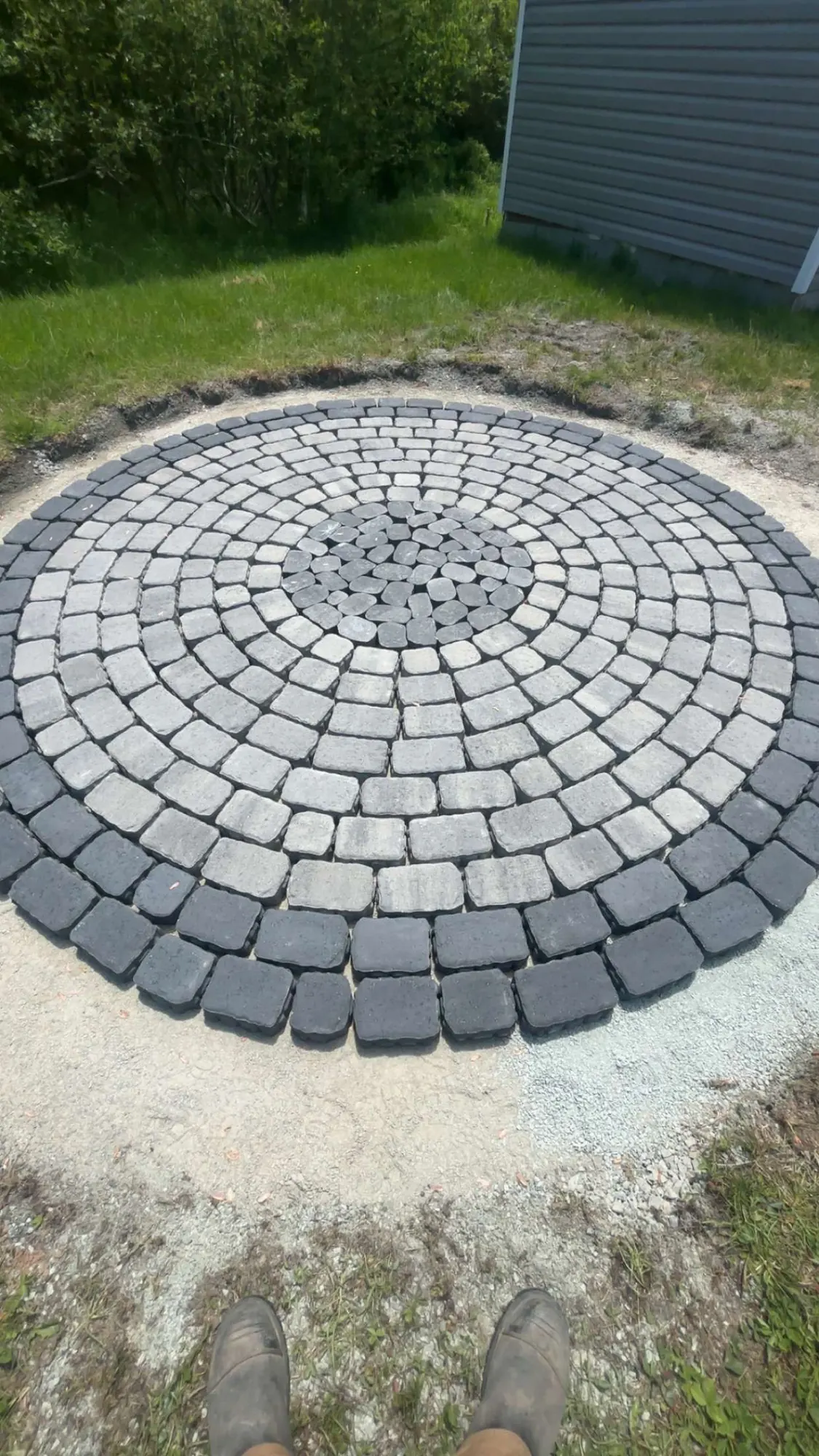
- Paver patios and walkways for older lots where concrete or asphalt has cracked or settled.
- Retaining walls and drainage where a yard steps down toward a street or the water.
- Plants, trees and garden beds to soften fences, driveways and foundations.
- Low voltage landscape lighting to show off new beds, steps and paths.
- Decks, pergolas and fencing to make smaller lots feel private.
HRM rules worth knowing
- Decks. Building or replacing a deck takes an HRM building permit. Per HRM’s deck FAQ, footings need at least 4 ft (1.2 m) of frost protection if the deck is attached to the building or sits higher than 2 ft, and the site plan should show property-line distances and watercourse buffers. Source
- Fences. Fences are exempt from the Nova Scotia Building Code, but HRM’s Building By-law (B-201) regulates fences over 2 m (6.5 ft): those need a permit, community council approval and notice to neighbours. Ordinary height and setback limits come from your zone’s land-use by-law, so check before you build. Source
- Underground utility locates. Call or click before you dig: Halifax Water routes locate requests through Info-Excavation (1-866-344-5463, the website or the mobile app), and its locates cost nothing. Source
By-laws and permit rules get updated, so check the current version with HRM (halifax.ca or 311) before you commit to a design.
When to book
The calendar is predictable: in Nova Scotia, Google Trends shows landscaping searches building from March, hitting their high in May and fading through autumn. Quote requests get a response within 24 hours, and booking early lets us fit your project in before the spring rush.
Services we offer in Dartmouth
Every project starts with a conversation and a free quote. We respond within 24 hours, and we’re available any day of the week.
Common questions
Do I need a permit for a deck or fence in Dartmouth?
Can you build near a lake in Dartmouth?
Does Dunbrack’s serve Dartmouth?
Ready to plan your Dartmouth project?
Tell us about your property and we’ll get back to you within 24 hours with a free, no-obligation quote.
Sources
Facts about this area and the rules above come from these sources. By-laws, fees and permit requirements change, so confirm with the municipality before you start.